
Sick Like the West, Live Like Ethiopia: The Grim Reality


Over millennia, the name Ethiopia has been associated with pride, humility, and a people full of life. Ancient writers did not speak of Ethiopia with pity, but with reverence. Homer, in The Iliad and The Odyssey, famously described Ethiopians as:
“the blameless Ethiopians, dwelling apart, the farthest of men, where the gods themselves go to feast.”
This was not charity. It was recognition.
Behind kings, kingdoms, and civilizations, our story followed a familiar human arc — dignity, struggle, resilience. Except for the past century.
Modernity Arrived! But Not on Our Terms
The last hundred years brought astonishing change. Medicine entered Ethiopian reality. Hospitals rose. Antibiotics, vaccines, surgery, diagnostics — all arrived. Along with them came the perks of modernization.
But also its shadows.

A few decades ago, the word Ethiopia became shorthand for poverty, hunger, and starvation in the global imagination. One photograph — powerful, real, but incomplete — froze our identity in time. Since then, Ethiopia has repeatedly been ranked among the poorest nations, often “winning” if the race is from last to first.
As of early 2025 , according to global estimates, 10 million people needed food assistance. This figure carries deeper weight, where over 36% of children under five are stunted. The Federal Ministry of Health of Ethiopia and stakeholders have been fighting this uphill battle to reverse malnutrition in the country.
This is not merely a nutrition issue. It is a lifelong health sentence! And yet — the truth is more complex.
Yes, challenges are real. But triumphs are real, too.
We Live in Ethiopia! Not the West
Economically, we live Ethiopian lives.
Based on 2024–2025 World Bank and IMF data, Ethiopia's average daily income is roughly $2.70 to $3.10 per person. This is just on the poverty line.
Yet, paradoxically, the national currency still allows day-to-day survival. People manage. Daily living continues. The market reality is shaped by persistent inflation. Food prices rise steadily, sometimes quietly, sometimes all at once. According to World Bank estimates, overall inflation stood at around 21% in 2024. National figures tell a slightly calmer—but still troubling—story, with the Ethiopian Statistical Bulletin reporting food inflation at 10.6% in 2026.
On paper, these are numbers. Every household decision, however, is shaped by this constraint — what to buy, what to delay, what to go without.
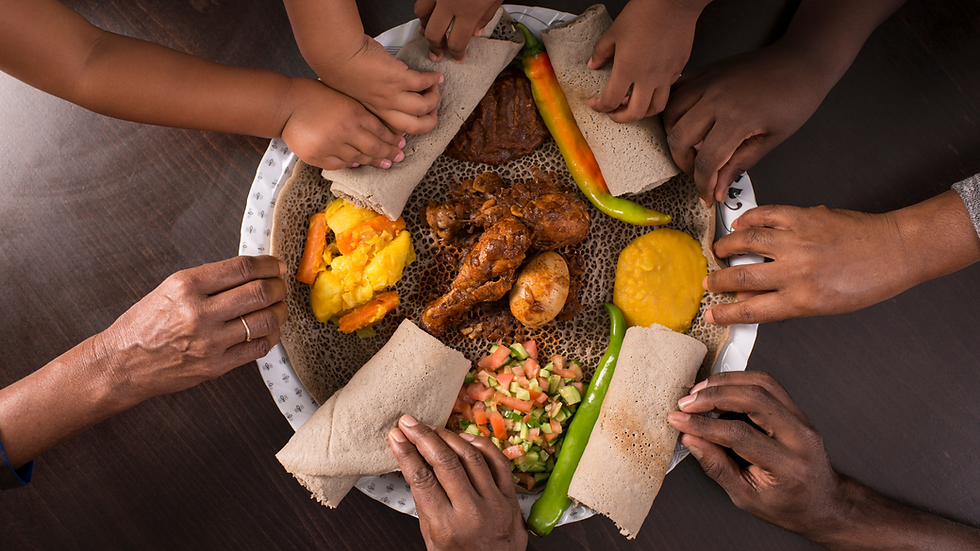
As an agricultural Society, food still finds its way to the table. Locally, it is said "የእለት እንጀራ አያሳጥንም", which translates to 'we trust, we will manage to eat.'
This is not comfort.
It is resilience. It is Ethiopia!
The Old Enemies Never Left
Communicable diseases have not been fully controlled.

In just recent years, Ethiopia has faced:
and the list goes on....
The old diseases never left. The new ones just arrived early.
Life Ends Too Early in Ethiopia
Life expectancy in Ethiopia remains around the mid-60s. It is dragged down by infections, trauma, and untreated chronic disease.

Ironically age of graduation for an undergraduate degree in Ethiopia is 24 years. This means that by the time an average guy graduates from university, he has spent 40- 50 % of his life just acquiring education. When he finally begins to establish himself professionally(which mostly happens in the 30s), he only has 10 to 20 productive years of life left ahead of him.
Unfortunately, a significant percentage of those who get to live longer live with disability.
This is not just numbers! It is the grim reality.
In the past decades, several well-known Ethiopians have died before the age of 60.
Hachalu Hundessa died young at 34. Netsanet Workineh passed away in his 40s. Eyob Mekonnen died at 37. Tesfaye Gebreab died at 54.
We can keep counting! Famous singer Tamirat Desta died at 39 years of age. Composer Elias Melka died at the age of 41.
This is not a coincidence. This is the average reality.
Even the former Prime Minister, His Excellency Meles Zenawi, died at 57.

Some of these deaths were traumatic. Some were due to chronic illness. Some were caused by infections that should not have been deadly in the 21st century; a pattern reflective of Ethiopian reality.
Of course, there are exceptions like Philanthropists Abebech Gobena and Singer Alemayehu Eshete (Ethiopian Elvis). Both died in their 80`s. Even the famous composer Emahoy Tsegué-Maryam Guèbrou died at the age of 99 in 2023. But these lives, admirable as they are, represent the exception — not the rule
What is considered premature death in the rest of the world is getting regarded as timely death in Ethiopia. Even the young age of 50 is quietly treated as old age.
That is not only tragic. It is devastating.
Yes, there have been improvements over the past decades.
Yes, life expectancy is rising.
But we are still dying young.

The numbers may be moving upward, but the reality on the ground tells a different story. Too many Ethiopians are still dying in their most productive years — before retirement, before stability, before watching their children grow.
We Imported the Diseases: Not the Benefits
Instead of acquiring the luxury of modern life, it seems we acquired its disease pattern. This is not an exaggeration; the data shows it clearly.

Cancer is rising sharply. Three years back(in 2022), Ethiopia had an estimated 80,334 new cancer cases and 54,698 cancer-related deaths. This number is expected to double in the coming decade.
Hypertension and diabetes are increasing at alarming rates, especially in cities.
Stroke is now a leading cause of adult disability. It is responsible for ~6.2% of total deaths in Ethiopia.
We could continue.
Ironically and tragically, we are meeting these diseases earlier in life. Cancer is no longer a diagnosis of old age. Women often arrive for care when breast and cervical cancers are already advanced, when options are fewer and outcomes harsher. Lung cancer, once associated with decades of exposure, presents at a younger age and at a later stage compared to the world.
In Oncology centers across Ethiopia, it is not unusual to see waiting rooms filled with people who are too young to be there, and already too late to be saved.
But the real question is: Why Us?
What makes us special — in the worst way?
Why did we get the worst of both worlds?
Misplaced Modernization
The simple answer is nutritional Transition.

Traditional societies ate organic, unprocessed foods and lived physically active lives. This was not by choice, but by necessity.
Modern societies have become sedentary. Yet, they built: preventive systems, early screening, health insurance, and long-term care.
We did neither fully.
We became a testing ground for processed foods without nutritional literacy, sedentary lifestyles without urban planning, and Western diseases without Western safety nets.
We became a wasteland of half-adapted change.
The West also struggles with these diseases, but it has the health infrastructure to manage them as chronic conditions. Patients are diagnosed early, treated continuously, and survive for decades.
So What Can We Do — Right Now?
There is nothing abstract about this. Neither is it a policy. This is truly personal.

You need to tell your family this:
Check blood pressure and blood sugar regularly
You might not “feel” them until it's too late.
Move daily
Walking is medicine. Farming is medicine. Physical labor protects the heart. Keep moving. Exercise.
Respect traditional diets
Our grandparents were right. Eat organically. Eat Legumes, Vegetables, and Whole grains.
Treat infections seriously
Don't bargain about your health. Take Vaccines when advised. Make sure to drink clean water. Hygiene saves lives.
Do not normalize early death!!!
Dying at 45 is not “God’s will.” It is a preventable disease.
Check with your doctor regularly.
Don't wait for symptoms to appear. Health facilities should not be what you visit when you get sick. Go and have a check-up.
Remember:
Knowledge is power.
And this story is our story
We can still change its direction. We can save this Generation.
Frequently Asked Questions (FAQ) – Health in Ethiopia
Q1: Where can I find affordable diagnostics for common diseases in Ethiopia?
Affordable diagnostic services are available in public hospitals, health centers, and government-run health institutes across the country. Some NGOs and private clinics also offer subsidized testing for conditions like diabetes, hypertension, malaria, and HIV. Some NGOs specialize in Sexual and Reproductive Services only.
Q2: What are the most common health challenges faced by Ethiopians?
Ethiopians face several health challenges, including:
Communicable Diseases like Malaria, tuberculosis, measles, cholera, and HIV/AIDS.
Non-communicable diseases like Hypertension, diabetes, stroke, and cancer.
Nutrition-related issues like malnutrition and stunting among children.
Traumatic Injuries like Road Traffic Accidents.
Q3: Where can I find reliable information on disease prevention strategies in Ethiopia?
To find the most reliable information on disease prevention in Ethiopia, use trusted sources like:
Ethiopian Federal Ministry of Health (FMoH) official website. You can check its policies, guidelines, and health campaigns.
The World Health Organization (WHO) Ethiopia page provides disease prevention resources and public health reports.
The WHO Africa page also provides health information and news on Ethiopia.
Local NGOs and communities' health programs provide educational materials and outreach activities to increase health awareness.
Moreover, you can check academic literature from peer-reviewed journals.
Q4: How can individuals reduce their risk of common diseases in Ethiopia?
Individuals can reduce the risk of common diseases in Ethiopia by employing the following strategies:
Regular health check-ups and screenings for blood pressure, blood sugar, and cancer markers.
Maintaining a balanced diet rich in legumes, vegetables, and whole grains.
Daily physical activity, including walking or farming.
Vaccination and adherence to prescribed medications.
Practicing safe hygiene and clean water consumption.


Comments