
When Work Becomes Illness

This is about all of us!
Have we considered the impact of the work we do on our individual lives?
Could the chronic ailment that is not responding to medical treatment be associated with our work?
Yes, this is about occupational exposure.
What is Occupational Exposure?
Occupational exposure happens when workers regularly encounter harmful physical, chemical, biological, or ergonomic hazards on the job. From dust in factories and construction sites to needle-stick injuries in hospitals, these exposures can silently damage health—and all too often, do.
Sometimes it is from dealing with vibration throughout the day. For instance, road workers, wood workers, and drivers of tractors may suffer from chronic joint problems due to dealing with vibrating equipment throughout the day.
The posture an office secretary maintains during work can severely impact her spine, resulting in long-lasting back pain years later. The symptoms are not always simple and direct. Most time they are masked and hidden. They are assumed to be due to some disease of unknown etiology. However, a simple office ergonomics might solve it.
The common Symptoms include
Respiratory symptoms – coughing, wheezing, chest tightness, shortness of breath, chronic cough, and sputum.
Traumatic injuries – cuts, fractures, amputations, especially in construction and manufacturing. Injury prevalence reaches nearly 45% in construction and up to 50% among metalworkers in Addis Ababa.
Musculoskeletal pain, like back and shoulder pain, in kitchen and hospitality workers, is documented in Bahir Dar at high prevalence levels, affecting quality of life.
Needlestick injuries and exposure to blood-borne pathogens, estimated risks for hepatitis B, C, and HIV among health care workers are high. In Ethiopia, being a TB endemic country, the prevalence of both primary and secondary TB among healthcare workers.
Ethiopian Reality

The reality is that occupational health has not been properly explored in Ethiopia so far. There are limited studies. The attention and investments directed toward it are even less.
A nationwide meta‑analysis across 23 studies found a pooled annual occupational injury prevalence of 44.7% (95% CI: 43.8–45.5%).
Respiratory symptom prevalence among industry workers is about 51.6% (95% CI: 43.6–59.6%), and among factory workers, specifically, around 55%. In textile factories, non-fatal occupational injuries fell to 11% during the COVID‑19 era—but machinery-related incidents still dominated, often affecting the hands and fingers.
What about workers from flower factories? What will the daily exposure to pesticides, pollen, and other chemicals manifest as?
Are there risk factors to it?
Definitely, yes!
Most Ethiopians can safely assume that they have the risk factor. Office spaces are designed based on function, not human resource health. Working in challenging conditions is considered a virtue, a strength. Protection equipment might not adhere to the standards, let alone the needs of the workplace.
Literatures cite the following as risk factors.
Lack of PPE increases the odds of respiratory symptoms. Not using PPE can triple injury risk.
No OSHA or health and safety training
Long working hours
Substance abuse (khat, cigarettes),
Male gender, and
More than 5 years of experience
Alas! There is no national reporting system for occupational diseases. Most results remain fragmented and local. There are very few longitudinal or cohort studies, and limited studies in mining, agriculture, and healthcare beyond major cities.
To make matters worse, enforcement of labor and safety laws remains weak. Though Ethiopia ratified many ILO conventions, its compliance and institutional capacity lag.
Why You Should Care? A Call to All Ethiopians
Imagine this.
It’s 5:00 a.m. in Addis Ababa. A mother wears her netela, kisses her sleeping child, and walks to a dusty garment factory. She will spend the next 10 hours hunched over a sewing machine with no proper ventilation, no mask, and no guarantee of returning home uninjured.

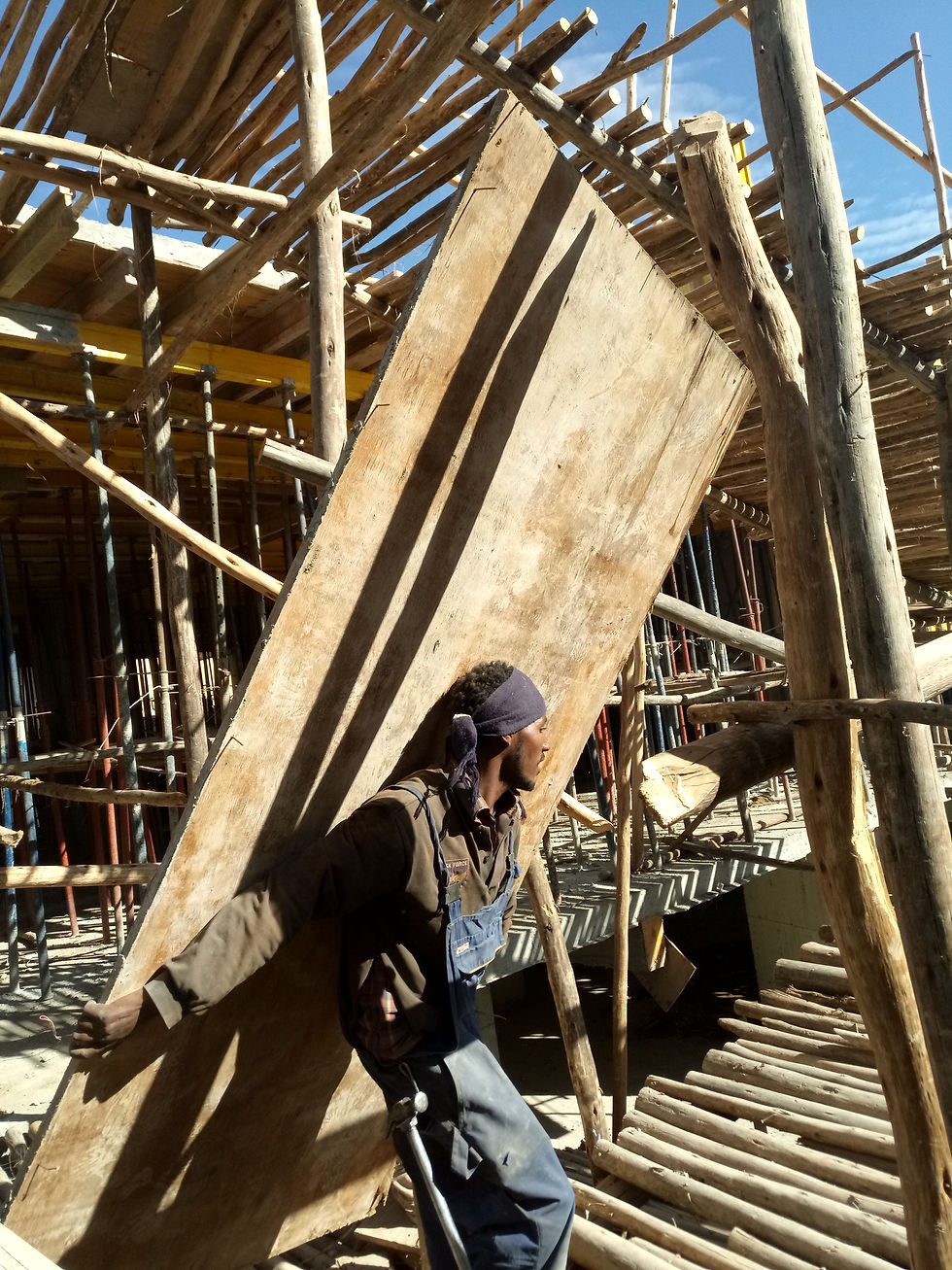
Across town, a young man climbs scaffolding at a construction site, carrying bricks without a helmet. His hands are blistered. His future, uncertain.
We have to remember this isn’t fiction. This is not a mere story depicted for the purpose of this article. This is the reality of thousands of Ethiopians. In their fight to put bread on the table and sustain their family, their health has been. pushed aside.

Nurses develop varicose veins, while chauffeurs develop chronic back pain. Some gradually lose their hearing, while others face skin problems. There are those who develop cancer.
However, these will not be noticed! They will not bleed nor result in agonizing pain. However, they are doomed to live life with an ailment that will not respond to medical treatment. They will keep on striving and surviving until they don`t. They are the victims of their work, their livelihood.
Yet, we rarely hear their voices, let alone notice their pain.
We need to fix this!
How do we fix this?

1. First, we must start by listening.
Occupational diseases in Ethiopia are not well-tracked because, frankly, most go unreported. It is not the absence of the ailment, but the lack of attention that makes them disappear behind the scenes.
Workers are afraid to speak. Many don’t even know their shortness of breath or back pain is a “work-related illness.” Hence, we as a nation must create a national registry and surveillance system to collect data. We can’t treat what we don’t acknowledge.
2. Enforce what already exists.
Ethiopia has signed international labor conventions. The legal frameworks exist on paper, while in reality, inspections are rare, and employers face little accountability. We need to enforce the laws to ensure a healthy workplace.
Imagine if inspections were as regular and respected as tax audits. If PPE violations led to actual consequences. If a worker could report unsafe conditions anonymously—without risking their job.
3. Bring protection to the people—don’t wait for people to ask.

Many injuries and illnesses could be prevented with simple personal protective equipment (PPE)—gloves, goggles, dust masks, and ear protection. But in most factories or farms, PPE is either unavailable, poor in quality, or not used correctly. in this regard, we don’t need futuristic tech. Just common sense, commitment, and compassion.
4. Educate—and not just with posters.
We have to acknowledge that a few faded safety signs won’t stop a worker from lifting with their back instead of their knees. Nor will a once-a-year conference or seminar advise on occupational health. Education needs to be continuous, engaging, and adapted to real life.
People need to be informed on their mobile phones, on the social platforms they frequent. We need to educate them more frequently where they are. We need creative, ongoing, community-based education that empowers workers with knowledge—and dignity.
5. Empower health professionals to do more.

Doctors and nurses in Ethiopia’s hospitals are already overburdened. Many have little training in identifying occupational diseases. Unfortunately, most occupational diseases are misdiagnosed and mistreated most time. This creates a vicious cycle.
Let’s train health workers to ask the right questions: “What do you do for a living?” “Are you exposed to dust?” "Do you handle vibrating equipment?" “Do others at your job feel the same symptoms?”
6. Make this everyone’s business.
At the heart of it all is this: we must care. As a society. As individuals. This issue is not about “poor workers” somewhere. It’s about our sisters in the textile industry. Our uncles are on construction sites. Our neighbors in clinics.
A Final Thought:
To heal Ethiopia, we must first heal her workers.
And we can—if we start now


Comments